 The Coach Conversation
How to Coach a Remote or Hybrid Team
By Jon Kludt · 7 min read
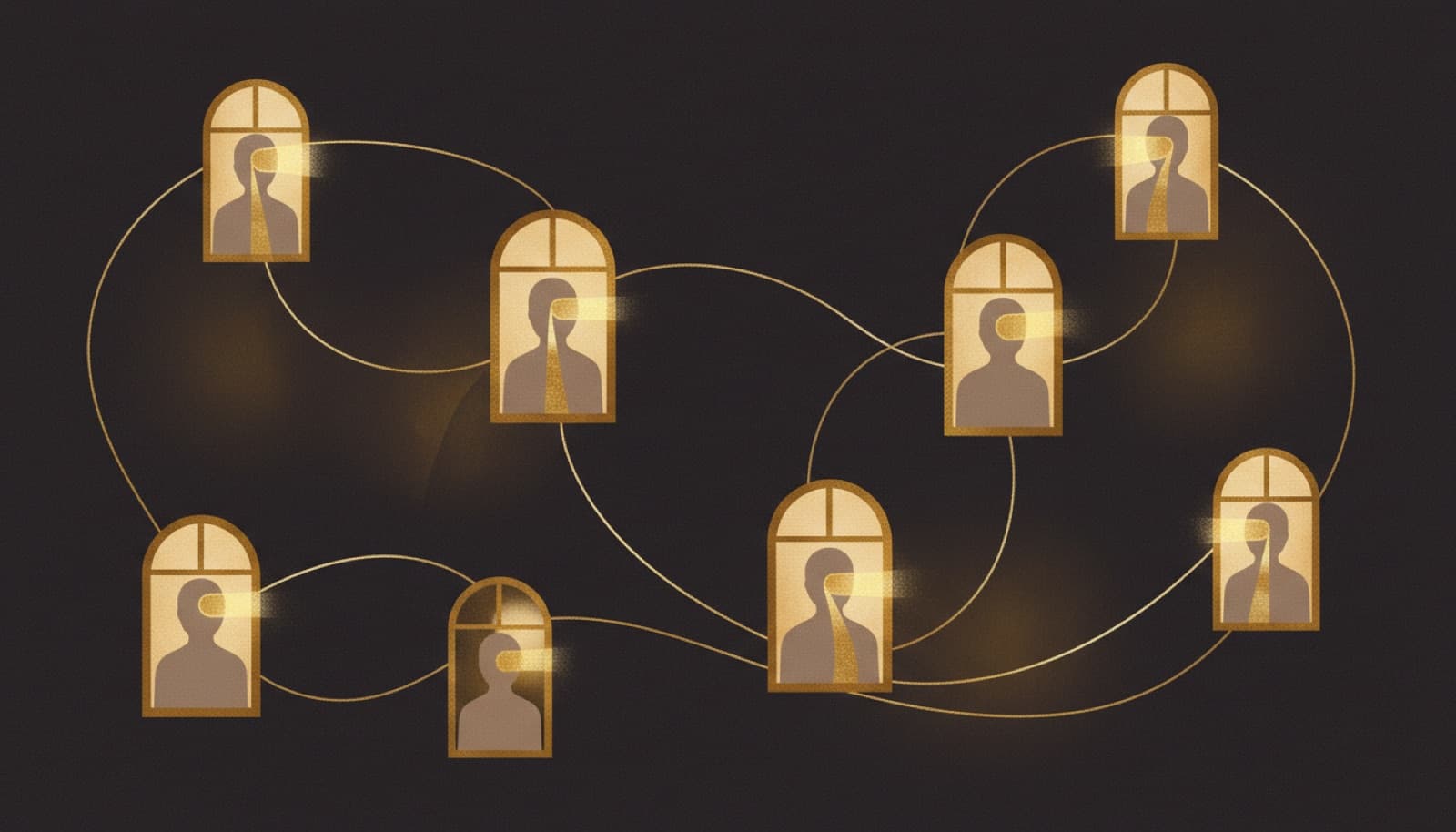
You can see everyone’s green dot. Slack says they’re online, the calendar says they’re busy, the tracker says the hours are logged. And if someone asked you point-blank how any one of your people is actually doing — not their output, them — you’d hesitate. That gap is the whole problem with remote management. Presence is easy to see now. People are not.
When your team sat in the same room, coaching happened by accident. You caught the sigh after a hard call. You noticed someone go quiet in a meeting and grabbed them by the coffee machine. You read the room without trying. Distance deletes all of that. The hallway is gone, and nothing has replaced it — unless you build the replacement on purpose.
Why remote management goes wrong
When managers lose the informal signals, most reach for the wrong substitute: surveillance. Activity trackers. “Cameras on.” Expecting a reply the second a message lands. It feels like control, so it feels like management.
It isn’t. Monitoring tells you whether someone is typing. It tells you nothing about whether they’re stuck, checked out, quietly job-hunting, or two weeks from burning out. Worse, it broadcasts a message loud and clear: I don’t trust you, so I’m watching you. People who feel watched don’t open up. They perform being busy and hide everything that matters — the confusion, the disagreement, the early signs of a problem you’d want to catch at week one instead of week eight.
The thing that actually built your team was never proximity. It was conversation. Remote doesn’t remove your ability to coach. It removes the accidental version of it. So you replace accident with intention: fewer status pings, more real 1:1s, and a standard of trust and clarity that no dashboard can fake.
The remote-specific challenges (and what to do about each)
Distance breaks a handful of things you used to rely on. Name them, and each one has a move.
You can’t read the room. Over video you get a face in a box, often laggy, often looking slightly away at another screen. Tone and body language mostly vanish. So stop guessing and start asking. Replace “They seem fine” with a direct question: “You’ve been quieter than usual this week — is that just heads-down focus, or is something weighing on you?” Saying the observation out loud gives them a door.
Silence is ambiguous. In an office, no reply means they walked away. Remote, silence could mean busy, confused, annoyed, overwhelmed, or gone for the day — and you’ll fill the blank with your worst assumption. Don’t. Make a habit of closing loops explicitly: “No rush on a reply, but I want to make sure this didn’t get buried — still good for Thursday?” Ambiguity is the tax on distance; explicitness is how you stop paying it.
Disengagement hides. A checked-out person in an office is visible. Remote, they can coast for a long time behind a muted camera and on-time deliverables. The tell isn’t in the work — it’s in the shrinking. Fewer questions, shorter answers, no more half-formed ideas dropped in chat. When someone who used to push back goes agreeable and quiet, treat it as a signal, not a relief.
Feedback feels heavier over video. The same sentence that lands lightly across a desk can feel like a formal review when it’s a face filling a screen with no small talk around it. So add the context you’d normally supply with your presence. Lead with intent: “This is a small thing and you’re doing great overall — I just want to sharpen one part of how the last deck landed.” Name that it’s minor when it’s minor, so they don’t spiral.
The intentional remote 1:1: COACH
A drifting 1:1 becomes a status update — “what did you ship, what’s next” — which is exactly what your project tool already tells you. To coach at a distance, run the conversation on purpose. The COACH framework gives you five steps that turn a check-in into a real conversation, and every one of them matters more when you’re remote.
C — Come Prepared
Walking in cold is more expensive over video, because you can’t warm up on the way to the room. Spend two minutes first: what did they say last time, what did you promise to follow up on, what’s actually going on in their work this week. Preparation signals that this time is theirs and not an afterthought squeezed between other calls. “Last week you mentioned the handoff with design was rough — I want to start there.”
O — Open
In person, the first thirty seconds open themselves. Remote, someone joins straight from a wall of other meetings with their guard up. Opening matters more precisely because you can’t read body language — so you have to invite the state you can’t see. Skip the reflexive “How’s it going?” that earns a reflexive “fine.” Ask something with a door in it: “On a scale of running-on-fumes to genuinely-good, where are you this week?” Then let them actually answer before you move on.
A — Ask
This is the heart of it, and the hardest part remote. Ask open questions and then — this is the move most managers can’t hold — stay quiet. Over video, silence feels unbearable; the lag makes three seconds feel like thirty, and the urge to fill it is enormous. Resist. The best answer usually arrives after the pause, once they realize you actually want it. “What’s the part of this project you’re least sure about right now?” Then close your mouth and count to five. The silence is doing the work.
C — Confirm
Remote misalignment is silent and slow — you both nod, log off, and discover three weeks later you meant different things. Kill it in the moment by playing it back. “So what I’m hearing is you’re blocked less by the code and more by not knowing who owns the final call — did I get that right?” Confirming turns a vague conversation into a shared, specific understanding, and it gives them the chance to correct you before the gap becomes a problem.
H — Hardwire
A great conversation that lives only in memory is gone by the next standup. Hardwire it: agree on one or two concrete next steps, write them down where you’ll both see them, and pick up on them next time. “So you’ll draft the ownership map by Friday, and I’ll get you time with the design lead — I’ll note both and we’ll check them next week.” This is what builds trust at a distance: your people learn that what they tell you actually turns into action, not vapor.
If you want the whole thing scripted — the exact opening questions, the follow-ups that get past “fine,” and a one-page guide for each of these five steps — that’s what the COACH Kit is. It’s a one-time $99 toolkit with question banks and ready-to-run scripts so you’re never improvising a remote 1:1 cold.
Async and in-between
Coaching a remote team can’t live entirely inside a weekly call. Half of it — maybe more — happens in writing, in the gaps between meetings, in how you show up in Slack.
The same principles carry over. Ask instead of assume: when a message is terse, reply with curiosity, not a verdict — “Reading this two ways — do you mean we’re blocked, or just flagging it?” Confirm in writing: after a thread that decides something, post the one-line summary of what you landed on, so “I thought we agreed” never happens. Hardwire visibly: praise good work in the open channel, not just the DM, so recognition isn’t a private whisper. And protect the async version of the hallway — give people a low-stakes place to think out loud without it reading as a formal request.
Most of all, model the trust you’re asking for. Don’t reply to weekend messages and then wonder why nobody unplugs. Don’t demand cameras on and then multitask through 1:1s yourself. Remote teams watch what you do far more than what you announce. The manager who protects focus time, closes loops, and runs real conversations builds a team that holds together across any distance — no tracker required.
You don’t manage a remote team by watching it harder. You coach it, on purpose, one real conversation at a time.
Related: One-on-One Meeting Questions · How to Give Employee Feedback That Sticks
Turn this into a habit your whole team feels.
The COACH Kit gives you the full system — masterclass, scripts, and the one-page form — for $99.
Get the COACH Kit →